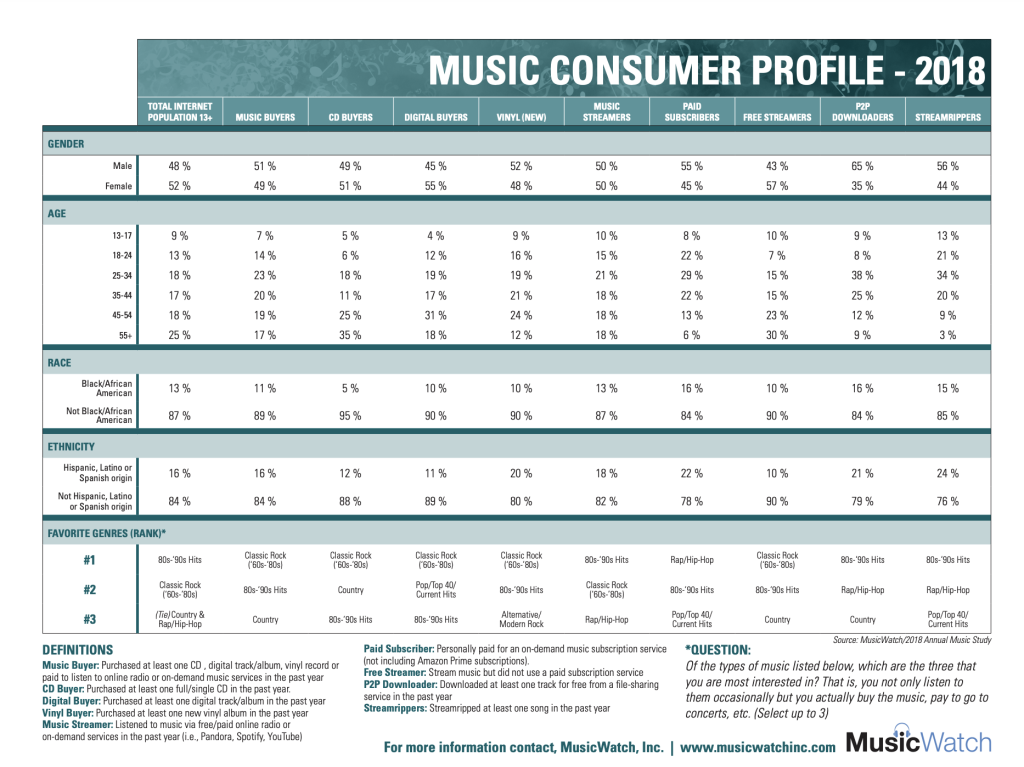
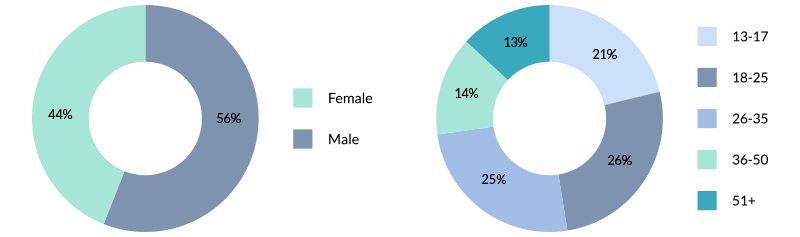
The target demographic for a typical record store would initially be assumed to be mostly the older generation who grew up buying and listening the vinyl records. However due to the vinyl resurgence as well as the mass popularity of coloured records, the demographic has reverted back to including teenagers in reports. In fact as of 2018 which was a pivotal year for the vinyl resurgence, MusicWatch reported that 25% of the US vinyl sales were directly from consumers aged between 13 and 24 (Figure 1). Furthermore the music research analyst company also posted their analysis of the current vinyl trends and discovered that currently 47% of the US buyers are under the age of 25 (Figure 2). To put this into context, in 2000 when most of the current consumers were not even born, the value of vinyl sales was less than $100 million, in comparison to the $13.2 billion of CD’s which in 2022, vinyl currently outsells.
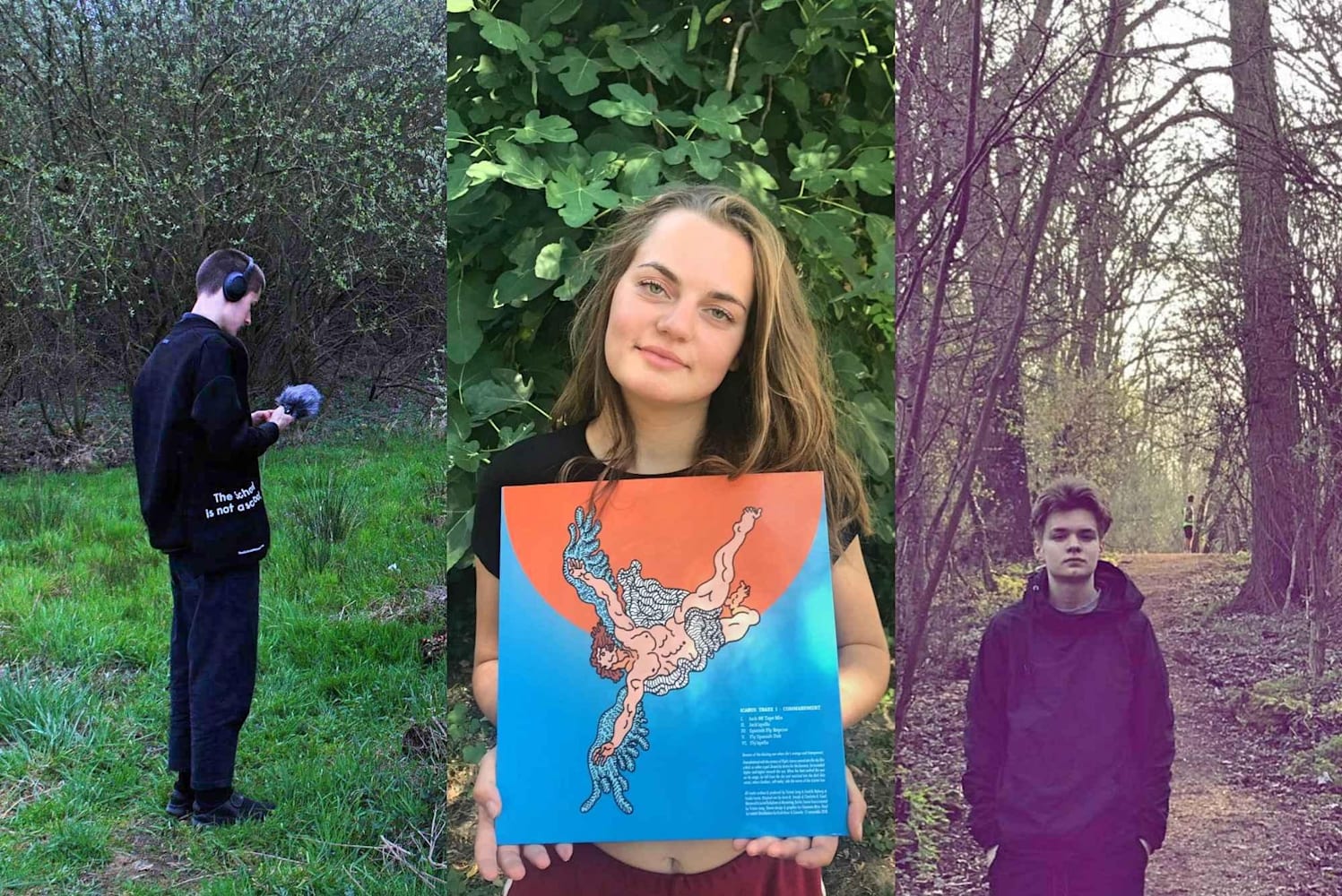
Furthermore, Red Bull Belgium interviewed a select few teenagers to understand their motive behind buying this format, which an interviewee called Billie (seen in the middle of Figure 3) stated that “the feeling of buying the record, holding it in my hands, playing it, … is so much nicer than on my phone” (Red Bull Belgium, 2019). This brings up the idea that the younger generation are potentially buying vinyl records due to the physical feel and look, as an added bonus to the music.
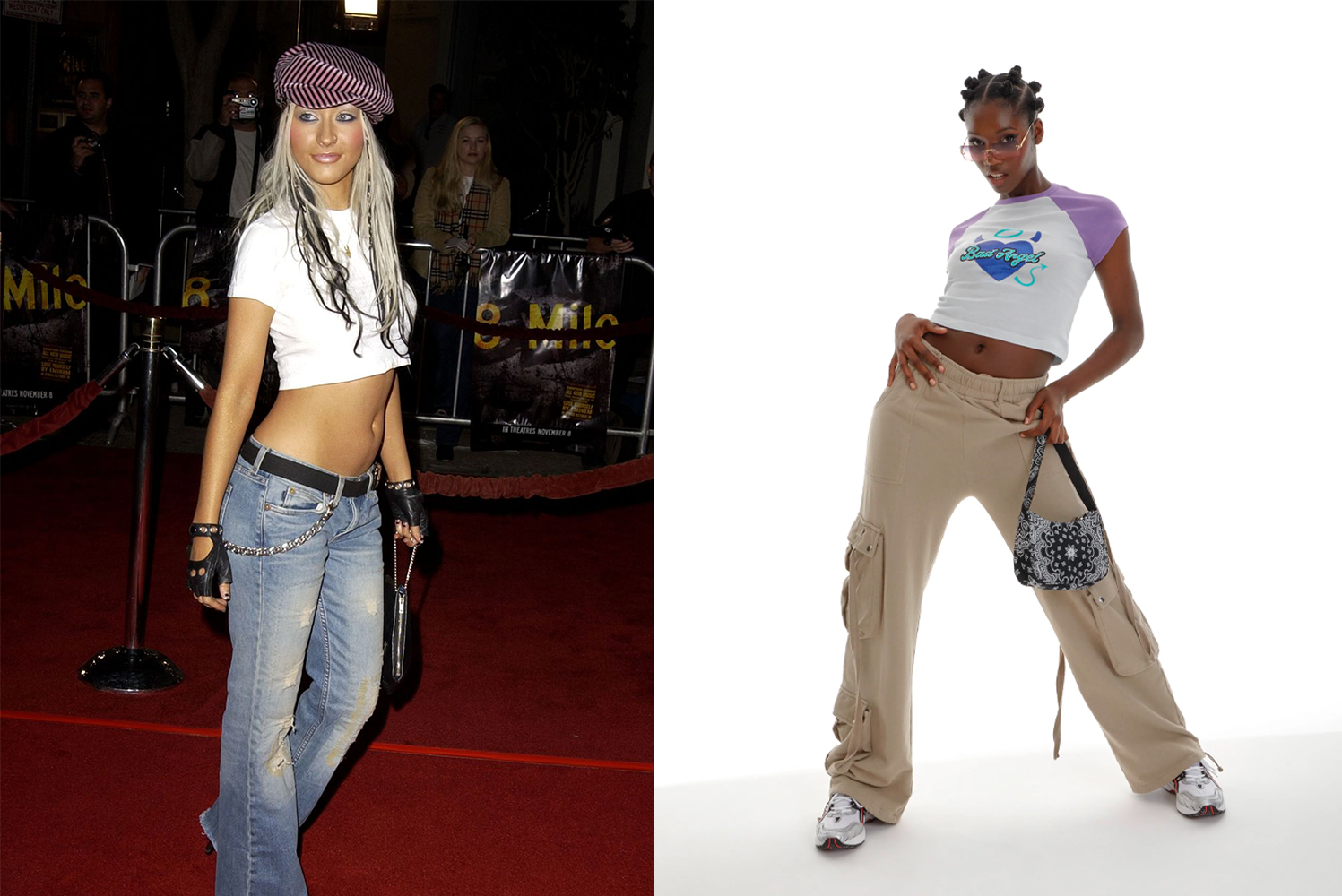
Although there is no concrete evidence to suggest brutalist design is favoured more by the younger generation and those buying now vinyl, we can construe this from some of the recent trends such as the ‘y2k’ fashion movement. This specific trend consists of Gen Z revisiting clothing styles from the late 90’s to early 2000’s. Alexis Ambramson who is a ‘Generational Innovation Expert’ believes that this trend stems from millennials being ‘risk averse’ and reluctant to ‘create new experiences on their own'(Ambramson, 2019), such as new fashion trends which Gen Z have taken into their own hands and adapted past styles into new ones. This can be directly compared to the resurgence of vinyl records and increased consumer habits within this demographic, as they have taken a format that was popular many years ago and transformed the industry to fit modern trends.
An example of this is seen in Figure 4 where a clothing brand called ‘Bad Handwriting’ has taken a y2k style piece called the ‘baby tee’ which is a cropped raglan t-shirt with a graphic on the front. This style of t-shirt was popular during the 2000’s and can be seen worn by singer Christina Aguilera on the left of figure 4. The fashion brand has taken something that was fashionable 20 years ago and added their own modern twist to appeal to the current consumer market.
References
MusicWatch Inc (2018) MUSIC CONSUMER PROFILE -2018. Available online: https://www.riaa.com/wp-content/uploads/2019/05/MusicWatch-Consumer-Profile-RIAA-2018.pdf [Accessed 3 Dec. 2022].
MusicWatch Inc. (2022) Music Acquisition Research Report | MusicWatch Inc. Musicwatchinc.com. Available online: https://musicwatchinc.com/research-studies/music-acquisition/ [Accessed 4 Dec. 2022].
Red Bull Belgium (2019) Why do teenagers still buy vinyl records? Red Bull. Available online: https://www.redbull.com/be-nl/why-do-teenagers-still-by-vinyl-records [Accessed 11 Dec. 2022].
Velasquez, A. (2019) Why Nostalgic Fashion Holds a Deeper Meaning for Millennials. Sourcing Journal. Available online: https://sourcingjournal.com/denim/denim-trends/nostalgic-fashion-millennials-retro-vintage-80s-90s-172152/ [Accessed 4 Dec. 2022].
Bad Handwriting (2022) Bad Angel Graphic Raglan Baby Tee. Bad Handwriting Clothing. Available online: https://badhandwriting.co.uk/products/bad-angel-graphic-raglan-baby-tee [Accessed 9 Dec. 2022].
Sims, J. (2021) Y2K Fashion is Back. Are Its Bad Vibes Back, Too? Harper’s BAZAAR. Available online: https://www.harpersbazaar.com/culture/features/a37078963/y2k-fashion-is-back-are-its-bad-vibes-back-too/ [Accessed 9 Dec. 2022].